Master Class: How Quinnipiac Uses Alumni Events to Drive Engagement, Capture Data, and Inspire Giving
Mar 2026 - READ IN 7 MINUTES

Alumni events have come a long way from hand-written name tags, cheese cubes, and a vague hope that “something good” will happen. Today’s best alumni programs are strategic engagement moments that deepen relationships, surface meaningful data, and even drive giving.
Quinnipiac University is a prime example of what happens when events stop living in silos and start working as part of a connected ecosystem. Using GC Events, Quinnipiac successfully executed 90 strategic events, including 31 regional alumni events across 21 cities, while streamlining operations and creating meaningful engagement at scale.
This Master Class breaks down how they did it, and what advancement teams everywhere can learn from their approach.
About Quinnipiac
Quinnipiac, a private, coeducational university in Hamden, Connecticut, offers a diverse range of programs and courses to approximately 6,500 undergraduate and 2,900 graduate, law, and medical students. The institution boasts a passionate global alumni network that is 70,000 strong.

Behind Quinnipiac’s event success is what the team calls a “small but mighty” operation. With a lean staff responsible for everything from event ideation to post-event analysis, efficiency matters. The right technology has allowed them to reduce manual work while still delivering events that feel personal, polished, and impactful.
What Makes a Great Alumni Event Today?
Modern alumni events are no longer just about getting people in a room. The most effective advancement teams view events as multi-purpose engagement tools that can:
- Strengthen alumni relationships
- Capture valuable engagement data
- Create meaningful networking experiences
- Build institutional affinity
- Introduce or reinforce giving opportunities
Types of Alumni Events That Build Engagement Year-Round
Strong alumni engagement programs rarely rely on just one type of event. Instead, they create a mix of experiences that connect alumni in different ways throughout the year.
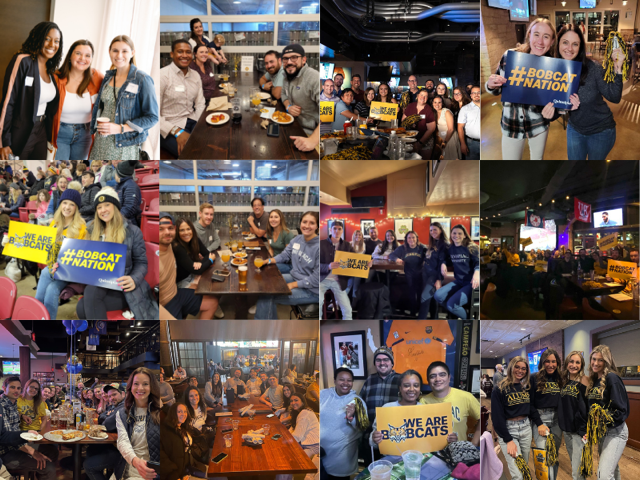
At Quinnipiac, the alumni events strategy includes a wide variety of formats designed to reach different audiences and engagement levels. Some gatherings are casual regional meetups, while others take place in unique venues (e.g., they hosted one pregame alumni reception at Yankee Stadium).
A typical year might include:
- Regional alumni events, like happy hours and brewery meetups
- Athletics events, including game watches and stadium receptions
- Affinity gatherings, such as academic program reunions and faculty celebrations
- Student–alumni networking events in cities like Washington, DC and Los Angeles
- Athletic pregame receptions and alumni days
This variety allows the advancement team to maintain year-round engagement while creating both casual and high-impact opportunities for alumni to reconnect with the university.
Creating an Events Ecosystem
At Quinnipiac, events are part of a broader engagement strategy that connects multiple stages of the alumni experience, from the first invitation to the final follow-up.
Instead of treating event planning, registration, communications, and fundraising as separate processes, the team approaches them as one connected workflow that includes:
- Event marketing
- Registration and ticketing
- On-site check-in
- Post-event communication
- Optional giving
The result is a smoother experience for alumni and a simpler workflow for staff, with less manual coordination between systems.
GC Events became the cornerstone of our process—it’s where everything starts.Kyle Adams Quinnipiac University
The Scale: Quinnipiac by the Numbers
Before getting into the “how,” it’s worth pausing on the “wow.” Over the course of one year, the Quinnipiac team hosted:
- 90 strategic events across in-person, virtual, affinity-based, academic, athletic, and regional formats
- 31 regional alumni events in cities like New York, Boston, Los Angeles, Chicago, and Washington, DC
- 2,533 unique alumni attendees (33.3% of whom made a gift)
These results are the outcome of a repeatable, flexible system that supports both intimate gatherings and large-scale weekends with equal ease.
Smarter Ticketing = Better Experiences
GC Events lets institutions create flexible ticket types—including tiered pricing, sponsorships, experience upgrades, and affiliation-based tickets—each with its own rules, limits, and pricing.
Quinnipiac leveraged this flexibility during their annual Men’s Ice Hockey Alumni Day, customizing ticket options based on:
- Price
- Fair market value (FMV)
- Guest limits
- Experience type
Different ticket options allowed alumni to self-select experiences that fit their interests without requiring staff to manage multiple registration tools behind the scenes.
The result: clearer choices for attendees and cleaner data for staff.
Optional Giving at Registration: Small Ask, Real Impact
The team says optional giving during event registration turned out to be one of their highest-impact—and lowest-lift—strategies. In FY25 alone:
- 467 gifts were made during event registration
- $13,311 was raised across 39 events
Because the ask appears naturally during the registration process—when alumni are already engaged—it feels less like a fundraising pitch and more like a simple opportunity to support something meaningful.
Just as importantly, the Quinnipiac team was strategic about where optional giving made sense. The team focused on events where the connection to giving was clear, such as academic programs or athletics-related gatherings.
Community-facing events, like campus 5Ks that include local residents, were intentionally excluded.
The lesson: optional asks work best when they feel natural, relevant, and respectful of the moment.
Events create natural opportunities to introduce giving in a way that feels authentic to the moment.Nicole Caputo Quinnipiac University
Leveraging Registration Data to Drive Personalization
Event registration does more than manage attendance—it helps Quinnipiac better understand and engage the alumni who participate.
Custom registration fields capture details like:
- Full name
- Email and cell phone
- Class year
- Self-identified affinity groups
That information influences everything from staffing decisions to marketing segmentation.
For example, knowing who will attend helps advancement staff ensure the right team members are present to connect with specific groups or program alumni.
Registration data also informs messaging. For instance, the “Bobcats” mascot used today may not resonate with alumni who graduated when the institution was still Quinnipiac College. For those audiences, event messaging avoids that language entirely.
Operationally, registration exports also simplify logistics. Staff can generate name tags, prepare check-in lists, and ensure event teams have the information they need—even when WiFi access isn’t available (the bane of every event planner’s existence).
Communication That Feels Connected (Because It Is)
Event registration and event marketing go hand in hand at Quinnipiac
The GC Events platform allows the team to:
- Customize registration confirmation emails
- Align branding and tone with broader campaigns
- Clearly communicate logistics like parking, directions, and event details
Because everything lives in one ecosystem, registrants experience consistency from invitation to confirmation to post-event follow-ups—creating a clear, connected experience from start to finish.
On-Site Registration Without the Stress
On event day, simplicity is everything. Quinnipiac uses:
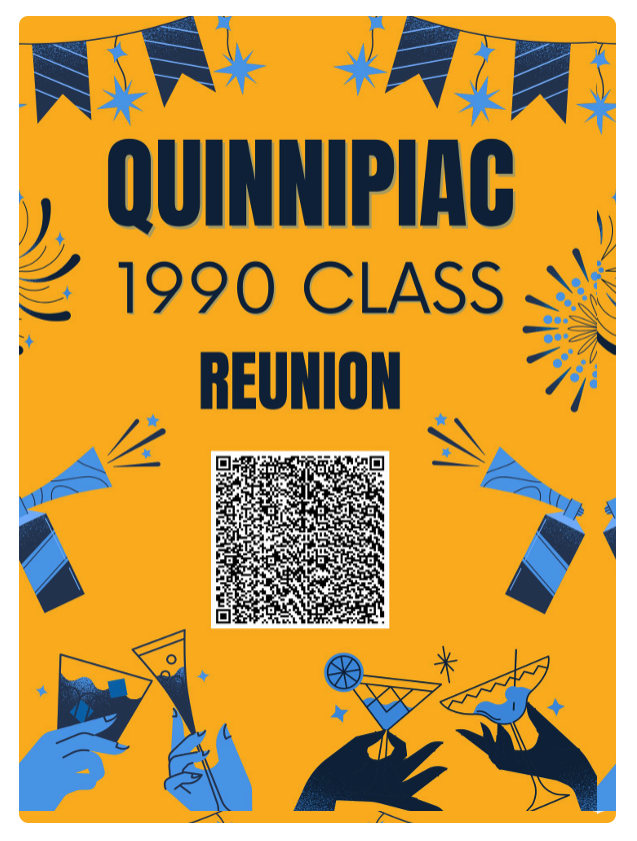
- Trackable QR codes for walk-up registration
- Direct links to registration forms
- Instant uploads for real-time check-in
This is particularly helpful for student-focused events, where walk-up attendance is common. Instead of staff manually entering information, attendees simply scan a QR code and complete registration themselves in seconds.
The result: faster lines, cleaner attendance data, and more time for staff to actually connect with alumni.
Knowing What Works (and Proving It)
Trackable links play a key role in understanding what’s driving event success.
With live visibility into registrations, gifts, and source attribution, the Quinnipiac team can see exactly which marketing channels are performing best.
Instead of guessing whether email, social media, or other outreach is working, they have real data to guide their strategy.
Add-Ons That Add Value (and Revenue)
Beyond ticket sales, Quinnipiac uses add-ons to enhance events while generating additional revenue.
Add-ons support:
- Merchandise sales
- Experience upgrades
- Custom selections using fields for sizing or preferences
FMV settings keep everything compliant, while custom fields ensure smooth fulfillment. The result is incremental revenue without complicating the registration process.
From Event to Donor: Turning Attendance Into Long-Term Support
While events are often seen primarily as engagement opportunities, they’re also a natural entry point for philanthropy.
Many attendees who make small gifts during event registration are new or infrequent donors. Those moments create opportunities for advancement teams to introduce giving in a way that feels contextual and comfortable.
Even built-in contributions—such as small donations included within ticket prices—can surface potential donors and spark deeper conversations.
By identifying these individuals and continuing the conversation after the event, Quinnipiac transforms event participation into a pathway for longer-term support.
Simple Alumni Events vs. Complex Events
One of the clearest lessons from Quinnipiac’s approach is that you don’t need different tools for different event types.
Simple Events
The team frequently hosts alumni socials, regional meetups, student activities, and athletic pregame receptions. These events are quick to launch, easy to replicate, and ideal for maintaining year-round engagement.
Complex Events
Bobcat Weekend is Quinnipiac’s annual homecoming celebration and their largest event of the year:
- 4,803 registrations
- 49 activities across multiple campus locations
- Ticket restrictions by activity
- 13 different promo codes with custom rules
- Offline registrations
- Re-sendable registration summaries
They manage it all from a single platform.
Post-Event Engagement That Keeps Momentum Going
The work doesn’t stop when the event ends.
Within 24 hours, Quinnipiac sends recap emails featuring event photos and highlights. These messages often go to the entire invitee list—not just attendees.
Why? Because seeing what happened creates a powerful sense of “next time I should be there.”
These recap messages help drive social engagement, build anticipation for future events, and keep alumni connected between gatherings.
How Advancement Teams Can Apply This Strategy
Quinnipiac’s events program works because it treats events as a strategic engagement channel—not just a logistical exercise. While every institution is different, the underlying approach can be adapted by advancement teams of all sizes.
Here are a few ways to start applying these ideas:
- Start with a repeatable event framework
Instead of reinventing every event, create a small set of formats—regional happy hours, alumni networking events, athletic gatherings—that can be replicated year after year. - Use registration as an engagement moment
Event registration is an opportunity to capture meaningful data, introduce optional giving, and personalize future outreach. - Connect events to broader advancement goals
Events can support fundraising, stewardship, student networking, and alumni engagement simultaneously when they’re planned intentionally. - Simplify operations wherever possible
Technology that combines marketing, registration, check-in, and giving reduces administrative work and allows staff to focus on building relationships. - Follow up quickly and consistently
Post-event recap emails, photos, and thank-you messages help extend the impact of each gathering and encourage alumni to attend the next one.
For many advancement teams, even small adjustments—like adding optional giving during registration or using trackable links—can turn routine alumni events into more powerful engagement opportunities.
What Advancement Teams Can Take Away
Quinnipiac’s success wasn’t about hosting more events, it was about hosting events more intentionally.
Key lessons:
- Treat events as a strategic engagement channel
- Build once, clone often
- Use registration moments to deepen relationships
- Let your platform handle logistics so staff can focus on connection
When events, data, and giving work together, teams save time, alumni feel more connected, and outcomes improve across the board.
Why GC Events is Such a Natural Fit
For institutions already using GC Online Giving, GC Events is a natural next step. It offers:
- Fast setup without IT support
- Registration, ticketing, and giving in one place
- Built-in donation prompts
- Integrated communications
- Automation that saves staff hours
- Clear ROI tied directly to engagement
Quinnipiac’s experience shows what’s possible when events stop being logistical hurdles and start becoming strategic assets.
From regional happy hours to homecoming weekend, every alumni gathering is an opportunity to deepen relationships, capture meaningful engagement data, and introduce giving in a natural way.
When the right systems are in place, events don’t just bring people together—they become one of the most powerful engagement tools advancement teams have. That’s exactly where platforms like GC Events make the difference. See if GC Events is right for your institution. Take a self-guided tour.
Watch Quinnipiac’s Popular GCPC Session On Demand
Want to hear the Quinnipiac team explain their events strategy in their own words? Watch the 40-minute session now for a deeper dive into how this small but mighty team drives registration and attendance.