How to Build a High-Performing Annual Giving Team
Apr 2026 - READ IN 20 MINUTES

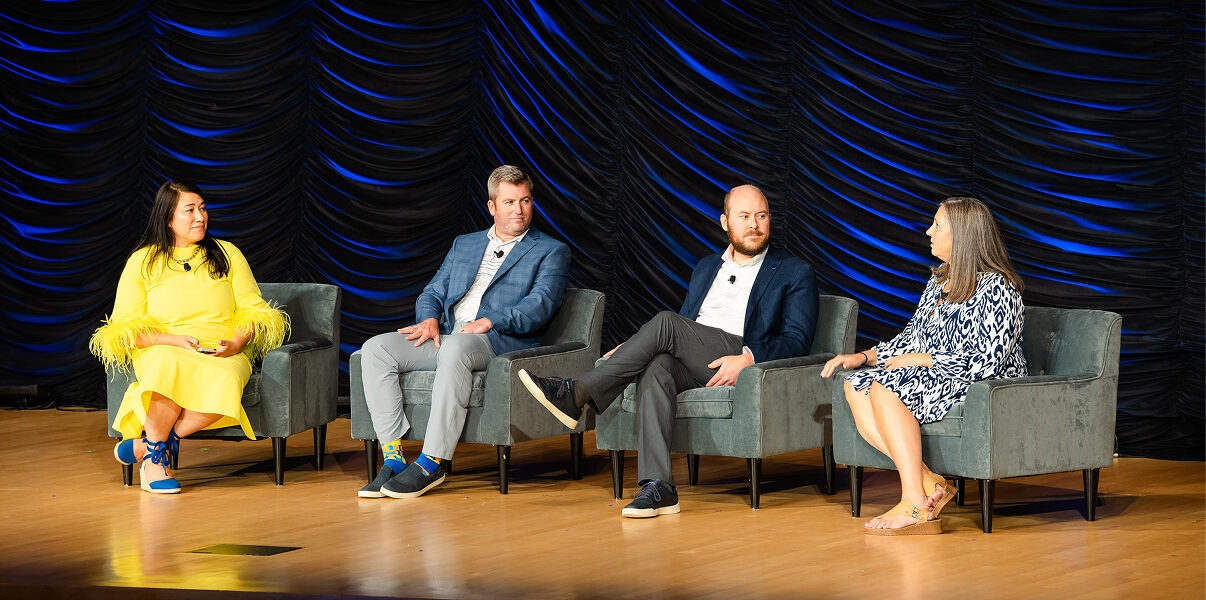
Insights from the GCPC 2025 panel: “Annual Giving Avengers: Assembling High-Performing Teams”
The talent market is tighter. The channel mix is wider. The expectations are higher. And the annual giving teams doing this work are, in many cases, trying to do more with the same—or less.
At GCPC 2025, Felicity Meu, Head of Partner Success at GiveCampus, sat down with three advancement leaders who’ve been navigating all of it in real time: Mike Treston, Director of Development at Malvern Preparatory School, Daniel Burgner, Assistant Vice President of Annual Giving at The George Washington University; and Megan Rajski, Assistant Vice President of Alumni Engagement and Annual Giving at Fairfield University.
The conversation was candid, practical, and—true to form for this group—genuinely funny. Below are the highlights, in their own words.
Want more conversations like this one? GCPC 2026 is coming to Washington, D.C. this August—and registration is now open.
Hiring for your annual giving team: what’s actually working?
Felicity Meu: Hiring for the annual fund has always been competitive and challenging, but I feel like since 2020 it’s gotten even harder for various reasons. What strategies have worked for you in attracting and onboarding strong new hires, despite budget challenges or back-to-office parameters?
Megan Rajski, AVP of Alumni Engagement and Annual Giving, Fairfield University:
“Instead of just posting ‘I’m hiring,’ say ‘I’m hiring and I’d love to have a conversation with you if you have questions before you apply.’ We also look at non-traditional spaces—we blast openings to our internal advancement offices when we can, go to internal staff and ask ‘do you have friends?’ and share the skill sets we’re looking for. We’re being transparent about salary so we can start having conversations with the right people. Less covert than in pre-COVID years, at least in my experience.”
Daniel Burgner, AVP of Annual Giving, The George Washington University:
“For a few key positions on my team, I was not afraid to go directly to people I thought would be a really good fit for the role. I started messaging them on LinkedIn, emailing them, or if I knew them personally, texting them—a little light stalking—and saying, ‘Have you seen this job I’ve posted? I think you might be really great for it and I’d love to have a conversation.’ Some said, ‘I did see it and I was curious.’ Others said, ‘I was not aware, but I’d love to have coffee and learn more.’ People like to be wanted. And I think your employee retention plan starts when you begin the recruitment process. Setting up that expectation of ‘I want you just as much as you may want this job, and I want you to be successful here’—that starts early.”
Mike Treston, Director of Development, Malvern Preparatory School:
“About three years ago we hired a Director of Alumni Relations who was already on campus in a different role in the athletic department. You could just tell from her personality and the way students were drawn to her that she’d do a really good job. There she was while we were sending listings out on LinkedIn, CASE, NACE—the candidate was right there. So I think you have to have that balance: do those traditional channels, but in this climate, also be a little more aggressive and creative in finding the right candidate.”
Where are we finding talent beyond the traditional pipeline?
Felicity Meu: Are there any creative industries or roles—maybe not the traditional pedigree of coming up through annual giving or starting in the phone program—where are we looking beyond what might be traditional?
Megan Rajski:
“I did not start here. I actually started in admissions for a college, then began volunteering for a local nonprofit. I really loved the work. I started putting together their newsletter—I have a communications background—and that’s how I fell into this field. So I’m pretty open to looking at people from all types of industries. It ends up coming down to personality once we meet, but I’m open to seeing that someone is a problem solver on their resume, that they can organize well, or that they want to be a people person. Those are really valuable skills to start with.”
Daniel Burgner:
“When I worked at Texas Tech many moons ago, one of the people we onboarded had a very non-traditional background—she was a local newscaster who was looking for a career change. When she came in, she was so polished and such a phenomenal communicator. She was concise and organized and so used to working on a deadline that she was incredibly successful. So definitely look outside of traditional channels.”
Classroom teachers also surfaced as an underutilized talent pool—communicators who already know the mission, already feel the impact of the work, and arrive with the intrinsic motivation that’s hard to build from scratch.
What skills are you actually hiring for?
Felicity Meu: When you think about what’s next in the industry, what are the skills or attributes you’re hiring for to fill out the advancement shop of the future?
Daniel Burgner:
“It’s got to be soft skills more than anything else. And funny—they’ve got to be funny, and they have to think I’m funny. And they have to bring me food. There’s a lot of bribery at GW, but it’s working for me specifically. But definitely those soft skills of being adaptable and a creative problem solver. Are they a collaborator? Will they raise their hand when they need help? And when someone else raises their hand, are they willing to answer the call and say ‘I can help you with that’? We can teach someone how to do digital ads. We can teach someone how to write, how to segment. You can teach someone how to do pivot tables—not me. People have tried, and I’ll confess in front of all of you: I have never learned how to do a pivot table. I’ve just faked it. But you can teach those skills. The soft skills, though, are much harder to teach.”
Mike Treston:
Mike built on that idea with a term his team actually coined, “We call them ‘culture keepers.’ There have been instances where candidates look great on paper—the resume is really strong—but they’re not clicking in the interview. And then there’s that person who walks in and you’re unexpectedly really meshing well with them. You feel like they can be a fan of the culture, propagate the culture. That’s huge. Because as Daniel said, the hard skills—we have time for that. It’s the soft skills that you either can’t teach, or it’s really hard to get someone to truly operate that way.”
Megan Rajski:
“I think one of my favorite things that someone ever said in an interview is, ‘I’m not always going to know the answer, but I’m really hungry to figure it out.’ And I thought that was an incredible interview answer. Because I think you can say you’re a hard worker—you can come across really strong—but the skill set I’m looking for is someone who says, ‘I don’t always know, but I want to know.’”
Felicity added: “With how fast things are changing, you have to be hungry and have a growth mindset in order to keep up. Those behaviors are actually really important because you could teach somebody a pivot table—or AI can do it for you six months from now.”
With how fast things are changing, you have to be hungry and have a growth mindset in order to keep up. Those behaviors are actually really important because you could teach somebody a pivot table—or AI can do it for you six months from now.Felicity Meu GiveCampus
How has the work itself changed in annual giving?
Felicity Meu: What are some of the biggest drivers of change and the ways your shops have evolved over the last three to five years?
Mike Treston:
“I think one of the things we’ve seen from donors is that the days of the old unrestricted funds are coming to an end—or at least in terms of the growth happening exponentially in those areas. We’ve diverted to give our donors a lot more options in the annual sense, where those dollars are relieving the budget. Athletics has been a big one for us—it just matched our culture. Having a really good understanding of your culture and where you need those dollars to go can be reflected in having really successful giving days and appeals. We’ve had to kind of widen that menu.”
Daniel Burgner:
“Someone once said to me: we need to flip that script and allow donors at an entry level to get really specific with their gifts so we can communicate impact. If you give $25 to a student organization or an athletic team, you might be able to communicate that impact. But $25 to your general fund? It’s basically impossible. So the idea is to get them in on a very specific early gift. Then for unrestricted giving—which budgetarily we all need—those conversations should be had with major and principal gift level donors you have a relationship with. I thought that was such an interesting concept, and I’m trying to wrestle with it in our strategy. But while the industry has changed so much, at the end of the day, so much of it has actually stayed the same. The fundamentals: communicating a need and then communicating the impact when they give. And I love that there’s a steadfast nature to our work.”
Megan Rajski:
“We went from ‘we can rely on two channels’ to ‘we need to be in 12 channels at all times.’ And because I manage a team of frontline intermediate gift officers, we went from a portfolio of 150 to 200 donors as the norm—going out on coffee dates, visits, and events—to having two people with thousand-person portfolios doing virtual visits. That’s been largely since COVID. I think that’s a giant change in our intermediate circles, which ends up affecting our pipeline and annual giving.”
That shift toward high-volume virtual portfolios is prompting some shops to rethink roles from the ground up. See how William & Mary built a dedicated digital gift officer team to meet the moment.
We went from ‘we can rely on two channels’ to ‘we need to be in 12 channels at all times.’ And because I manage a team of frontline intermediate gift officers, we went from a portfolio of 150 to 200 donors as the norm—going out on coffee dates, visits, and events—to having two people with thousand-person portfolios doing virtual visits.Megan Rajski Fairfield University
How has your annual giving team structure evolved alongside those changes?
Felicity Meu: It sounds like the structure of your team has changed a lot in the last three to five years. Can you tell me a little bit about how that structure has changed?
Megan Rajski:
“My current position oversees both alumni engagement and annual giving, but that was not always the case. Our structure has changed on the annual giving side to be more adaptive—not just having a data person, but now we have a data person and someone who’s great at web and digital, where before we might have just been looking at someone who is great at mail or direct marketing strategies through those channels. We’ve also expanded to include alumni engagement in my portfolio. I feel very lucky because we’re looking at a 360 of our alumni and looking at how to hybridize some of those positions, which are both engagement and giving. That’s a brand new concept for our institution. We’ve always been working hand in hand, but actually creating the thing in the same position is new.”
Felicity Meu: Mike, Megan talked about positions, plural—a lot of them. I imagine it’s a little bit different at your institution. Has structure changed there as well? Different size shop, different budgets?
Mike Treston:
“Currently we have nine people in our department, including myself. That may seem like a lot to some people in this audience, and for others not so much. When I started five years ago, there were three of us, including me. The way you operate on a three-person team and a nine-person team—it’s night and day. I was very lucky to be at Malvern at a time where they were willing to invest in our team, and our results have shown it in leaps and bounds. Five years ago we were all jumping in and working on the fall appeal because the bandwidth wasn’t there. We were focusing on major gifts—that’s where our biggest ROI is in terms of our time. And then we have to do everything else by committee and try to lift each other up and get those things done. When you’re done, you look back and say ‘we did it’—but do we really do it to the extent that we wanted to, strategically, dynamically? Probably not, because you’re just fitting it in to check the box. So having the structure we have now, we have such a better ability to be dynamic.
And I’ll give GiveCampus a plug—I wish I would’ve had GiveCampus five years ago. That would’ve been a great tool for a three-person team: ‘this is what we want to accomplish, help us do that.’ And now that we’re bigger and we’ve partnered with GiveCampus, that strategy can be even more calibrated, more detailed, more dynamic.”
Felicity Meu: Daniel, if I remember from your last visit to our team, you’ve made some changes on your team as well in the last couple of years—how you’ve structured things?
Daniel Burgner:
“I started at GW about three and a half years ago, and in that time I think there’s only one person who’s still on the team from when I started. Turnover’s natural in our industry, and we had an opportunity to restructure and rethink it. One of the greatest gifts I was given was when our leadership approved hiring a person to work on the annual giving team who’s only focused on donor relations. She lives in our shop and all she’s doing is leadership annual giving, stewardship, donor relations, and broad-based support—the acknowledgement cards, how we’re communicating impact, impact reports for gifts of all sizes, giving day stewardship. For giving day, her only job is to think of the stewardship strategy. It’s such a blessing to bring that in because our donor relations team is working so hard. But naturally, their attention goes to the top of the pyramid as it should, which means there’s less and less time for the majority of donors. Her job is specifically for leadership annual giving and broad-based support. That’s been huge. We’ve onboarded some great talented new people and added them in with some people at GW who have worked there for so long and are so focused and dedicated and brilliant—it’s been this beautiful synergy.”
Why does closer collaboration between annual giving and alumni engagement matter?
Felicity Meu: How have you seen a traditional annual fund and a traditional engagement shop work more closely together? Why has that been more important for your team over time?
Megan Rajski:
“A Jesuit once said something great to me: everybody is giving back. And to give back, you need to do time, talent, or treasure. I grabbed that phrase and I use it all the time about the collaboration between our two departments. How great is it that I can see the whole school through our shop instead of being on opposite sides of the house with sometimes warring priorities? Instead of just overlapping on what events we’re throwing and where we can add on a $5 donation, we’re actually finding the impact of that donation, doing follow-up after the event, welcoming them to the donor pool, and thinking about what kind of event would really increase our young alumni’s giving for the long haul. How do we see that runway together? That’s been a little bit of a game changer for us this year.”
Mike Treston:
“In the secondary ed space, most offices are already naturally aligned—alumni relations is in development—which is great because those conversations are happening that maybe wouldn’t be if departments aren’t merged. There’s nothing worse than an alumni relations person bringing a prospect on campus and then the MGO who’s been trying to connect with them for a long time does not know it. There’s just a lack of synergy there. For us it’s been a really great opportunity to have alumni relations and development together because there’s just natural conversation happening all the time.”
Megan summed it up simply: “It really is about making that alum or constituent feel like they’re part of your family. The end goal is that person’s experience—not who’s delivering it.”
For smaller shops especially, that alignment between alumni engagement and development can have a practical upside: shared platforms, shared costs, broader institutional buy-in. See how Perkiomen School got there.
There’s nothing worse than an alumni relations person bringing a prospect on campus and then the MGO who’s been trying to connect with them for a long time does not know it.Mike Treston Malvern Preparatory School
How do you stay sharp—and keep your team sharp?
Felicity Meu: How do you personally stay ahead of the trends? Where are you educating yourself and thinking about what’s next?
Megan Rajski:
“I think my word today is going to be ‘hungry.’ I’m always hungry—it’s part of the way I’m built. I always want to serve my donors and serve the people I work with and for. But strategically, I come to events like this on purpose. I plan out my conference schedules. I reach out on LinkedIn all the time—I use it as an integral tool. I’m consciously shopping—I love GiveCampus, I’m not leaving, but I always take a call when a vendor reaches out just to hear what they’re doing. And I ask the vendors I’m working with to do that too. The answer is—it’s like an improv thing: you always say ‘yes, and’ when something comes across your desk. Twice a month I purposely schedule calls with people I’ve met on LinkedIn, at a conference, or haven’t talked to in six months but connected with at some point. I put 30 minutes on a Friday and make a real effort to ask: ‘What’s going on in your shop? What challenges do you have? What can I learn from what you’re going through that might affect me now?’”
Mike Treston:
“We have a standing piece on our weekly staff meeting agenda for professional development—it’s meant for those types of discussions. ‘What have you come across this week? What are you hearing?’ And then I connect a lot with the other local Philadelphia schools and their directors—leaning on colleagues to understand what’s going on, what trends might be out there, new ideas, new events, to keep things fresh.”
Daniel Burgner:
“Give to as many other schools and nonprofits you’re passionate about as possible. Just token-level gifts—$25, $5, whatever you want to do. Then you’re added into that pipeline and you start getting a lot of great material back. When I get a nice mail piece, I’ll bring it to the office, write ‘This is cool’ on it, and leave it on Katie’s desk. If I get a good stewardship email, I’ll forward it to our stewardship person and say: ‘This hit me. I love this. We don’t have to copy it, but we should look at the fundamentals and see if we can replicate it here.’ And then definitely the professional network. I have friendships that are now 15, 16, 17 years old. They know my kids’ names and I know theirs. When something happens and you face a challenge, you can text them and say, ‘Do you have time today? I need to talk to someone.’ If you don’t have that network, start building it now. The best way to do it is to think about times when you needed help and start proactively offering that help to other people. That way, when the rains come, you’ve already got that baseline of support to lean on.”
Give to as many other schools and nonprofits you’re passionate about as possible. Just token-level gifts—$25, $5, whatever you want to do. Then you’re added into that pipeline and you start getting a lot of great material back.Daniel Burgner The George Washington University
How do you lead through ambiguity?
Felicity Meu: There is a lot of change and ambiguity in this sector, especially the last couple of years. How do you role-model being comfortable with ambiguity for your teams?
Daniel Burgner:
“I really try to keep my head above the churning waters as much as I can and focus on the big picture: I’m trying to raise money to make it easier for people to go to school, to have a life-changing education. If as a leader you’re always responding in a frantic way to the challenge du jour, your team will start acting that way too. And the other thing is—you don’t want to downplay the challenges, but it’s okay to have a sense of humor. If you can laugh about the small things, then when the big ones come—when there’s an encampment of students in your quad, when you’re going through a presidential transition, when your leaders are being called before Congress, when there’s an epic scandal—everybody knows that’s a serious moment. But for the little things, if you can laugh about it, learn from it, and move on.”
Megan Rajski:
“Finding the beauty in the ambiguity, or living there. Transparency is key—but with a little bit of a funnel effect. You should not be completely transparent if it will end up harming the team when you don’t have the answer yet. But it’s also okay to say ‘I don’t know all of this yet, but what I do know is X, Y, and Z, and I want to work with each of you and keep you up to date as we move through that.’ That creates less chaos on the team. Historically, advancement jobs have been a little bit more cloak and dagger—’we’re going to talk about this later, that’s a closed-door conversation.’ And I think that creates distrust with the people you work with.”
Mike Treston:
“I try to be really supportive of my team during challenging times. What I tell them is: take a step back and ask—is this problem coming from a vocal minority? If they get a really tense email from an alumnus or a donor who’s not happy about something, I say: take a step back and ask ‘overall, how is this reflective of the job you’re doing?’ Most of the time it’s not reflective—it’s one person who, for whatever reason, is giving negative feedback, and usually it’s unfounded. We talk a lot about ‘I’ve got you’ versus ‘gotcha.’ As long as that is there, and you’re working hard together and you know what the plan is—you’re going to be okay.”
What do you wish you’d known earlier in your advancement career?
Felicity Meu: If there is one thing you could have known at the beginning of your career—something you could have told yourself early on—what would that have been?
Mike Treston:
“When I first got into development, I had this scenario in my head of a donor saying ‘no’ as a really scary experience. But after 16 years of working in this industry—it’s usually actually somewhat of a pleasant experience, because you learn a lot from that interaction. And it can be ‘no, not yet’—they’re not flipping the table. If I’d known from day one, I think I would have hit the ground running a lot more instead of being so apprehensive.”
Daniel Burgner:
“I would go back in time and tell myself that the most important thing I can do is build relationships—and focus in on the relationships with colleagues I meet at conferences, colleagues in the office, clients, former clients, future friends, all of that. And also the donors we work with. There is nothing more valuable than a human-to-human relationship. The more time you can spend on the phone with people, on a Zoom, meeting people for coffee—the better. The more successful you will be, the happier you will be, and the more fulfillment you will find in this work, because it can feel very isolating. Start your relationships as soon as you can and start building that network.”
Megan Rajski:
“Early on in my career, and even now, I struggle sometimes with the idea of a mistake defining me—or a failed component defining my work ethic, my leadership, et cetera. So if I could go back to my younger self and say: you have so much runway, and it’s how you work with those mistakes that will actually define your success in a way that’s different from what feels like in the moment. Take it and learn from it and grow from it.”
The through line
Daniel, Megan, and Mike come from different schools with different budgets and different structures, but one consistent thread runs through everything they shared: intention.
The best advancement teams aren’t built by accident. They’re built by leaders who hire for hunger and cultural fit, who rethink every vacancy instead of just backfilling, who invest in their professional networks the way they invest in their donors, and who model the steadiness and joy that this work—hard as it is—genuinely deserves.
As Daniel put it: “a happy fundraiser is a good fundraiser.”
Watch the recording
The excerpts above capture the ideas—but they can’t quite capture Daniel’s pivot table confession delivered live, or the moment Mike explained how a banner plane flying over the Jersey Shore became one of Malvern’s most effective engagement tactics. This was a 50-minute conversation that was as entertaining as it was useful, and the full recording is worth your time. Watch Daniel, Megan, and Mike in their own element: candid, generous with what they’ve learned, and genuinely fun to listen to.
Ready to join the conversation in person? GCPC 2026 comes to Washington, D.C. this August—registration is now open.