NIL Fundraising, Revenue Sharing, and the New Math of College Athletics
Nov 2026 - READ IN 9 MINUTES

On September 28, 2026 the U.S. Senate passed the Protect College Sports Act by a vote of 77–22. It’s the first federal college sports bill to clear either chamber of Congress. For Division I athletics departments, the biggest financial change arrived more than a year earlier. On July 1, 2025, the House v. NCAA settlement took effect. It resolved a set of antitrust lawsuits against the NCAA and its major conferences, and it opened the door for Division I schools to pay athletes directly for the first time.
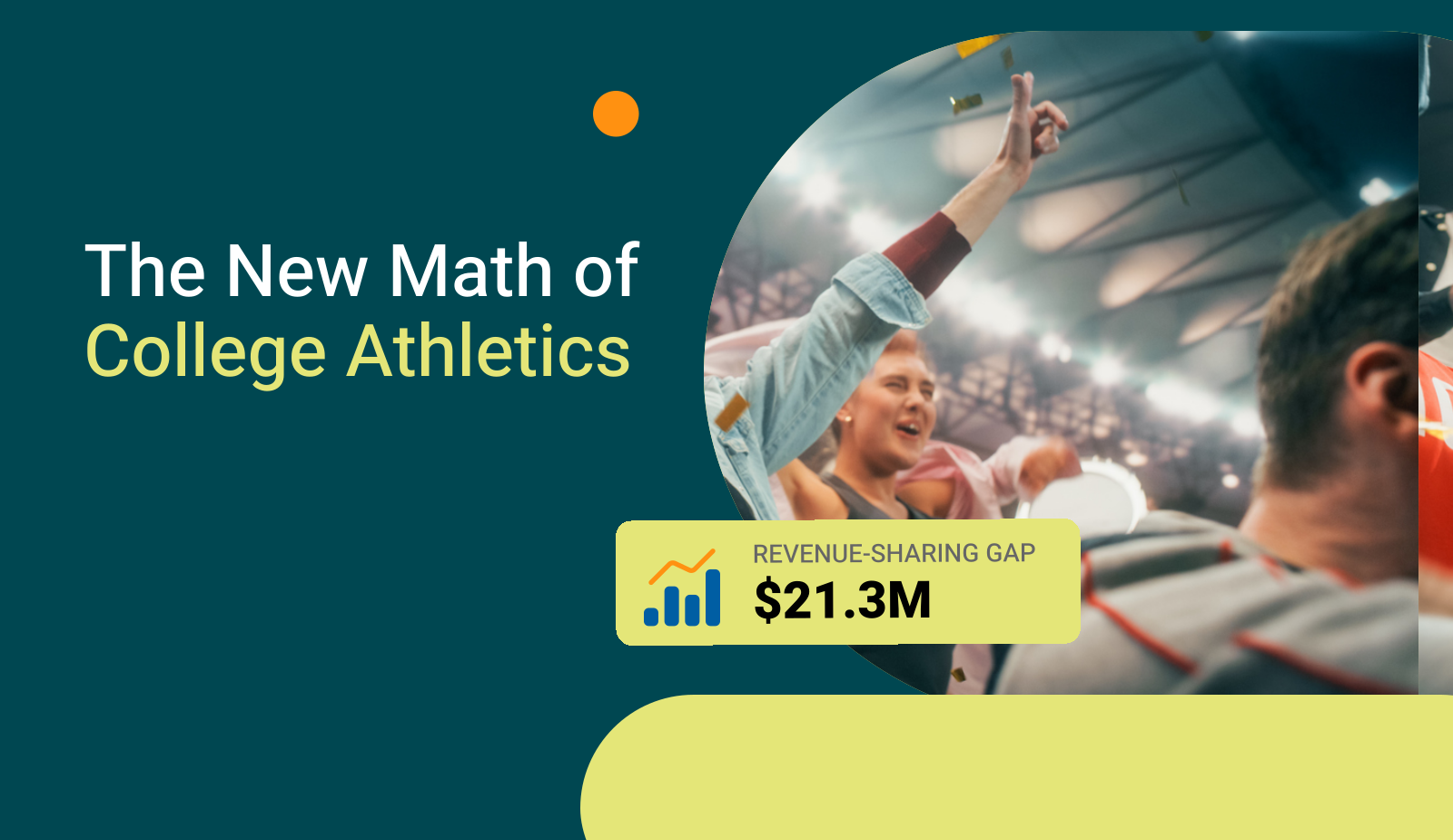
Schools that opted into the settlement can now share up to about $21.3 million a year with athletes, up from $20.5 million in the first year, and the cap rises each year. That’s a new annual cost on top of scholarships, facilities, travel, and staff, and departments will have to find new revenue to cover it. A growing share of that revenue will come from donors. The schools that close the gap will be the ones that run athletics fundraising as a year-round operation across the full donor pyramid.
Here’s where things stand, what GiveCampus data shows about how athletics giving is changing, and five moves that help programs raise at the scale this moment demands.
Where things stand right now
The Protect College Sports Act would write new rules into federal law. The Senate bill would:
- Limit total athlete pay to about $50 million per school each year, combining revenue sharing, a retention fund, and up to $5 million for women’s and Olympic sports.
- Let athletes transfer once without sitting out a season.
- Require schools to keep minimum roster sizes and scholarships in women’s and Olympic sports.
- Require player agents to register nationally, with fees capped at 5 percent.
- Give college sports leaders an antitrust exemption to enforce these rules.
The bill has backing from the NCAA and the major conferences. It also has serious opponents, including the Congressional Black Caucus, which says athletes weren’t meaningfully consulted. To become law, it still has to pass the House.
Whatever Congress decides, the direction is set: athletics budgets are getting bigger and more dependent on philanthropy. If the Olympic-sport requirements become law, they’ll add costs that schools can’t cut.
The $20-plus million question
Revenue sharing is a line item schools will carry every year, alongside every existing cost donors already help fund.
Here’s the math that should give every athletics development team pause. Even at $250 per gift, raising $21.3 million would take about 85,000 gifts every year. Closing that gap takes the whole donor pyramid working together:
- Major gifts from a smaller group of high-capacity donors, managed by a development team with time to focus on them
- Memberships and recurring gifts that turn one-time supporters into predictable annual revenue
- A broad, renewable base of alumni, parents, season ticket holders, and fans who give when the moment is right
Nearly half of all Division I schools use GiveCampus to raise funds for athletics and other priorities, including institutions like Notre Dame, Vanderbilt, Villanova, Northwestern, and Kentucky. The programs moving fastest are those building for scale.
What GiveCampus data shows
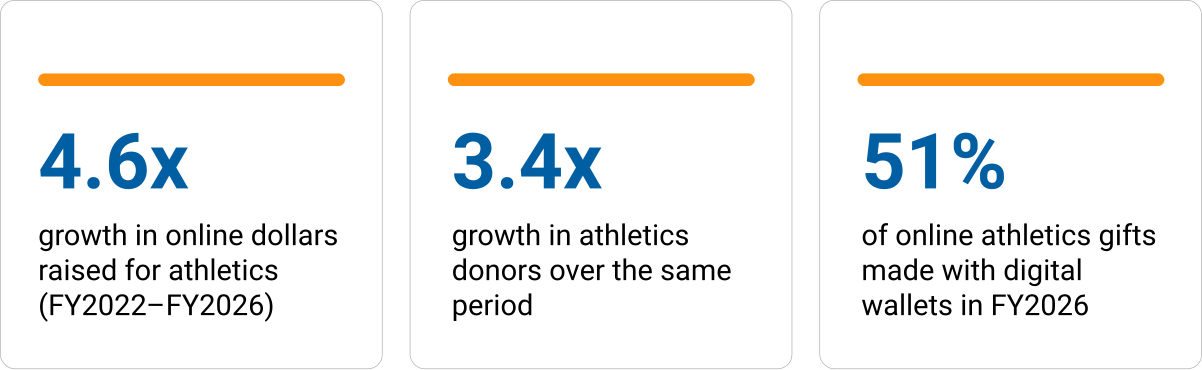
To understand how schools are responding, we looked at online gifts to athletics designations and campaigns at colleges and universities on GiveCampus from FY2022 to FY2026. Over that time, the number of schools raising money for athletics on GiveCampus nearly doubled. Gifts more than tripled, donors nearly tripled, and online dollars raised for athletics more than quadrupled.
A few findings stand out.
Programs are widening the base and deepening support at the same time. Donors nearly tripled, and dollars grew even faster, so athletics fundraisers are reaching more supporters and raising more from each one.
Fans give the way they pay. In FY2026, more than half of online athletics gifts came through digital wallets like Apple Pay, PayPal, Venmo, Google Pay, and Cash App. If your giving page makes fans dig out a credit card, you’re putting a barrier in front of most of your donors.
Recurring giving is the biggest untapped opportunity. Fewer than 1 in 10 online athletics gifts in FY2026 was recurring. For programs that now carry a recurring obligation to athletes, recurring revenue is the most direct match, and it shouldn’t add work for your team. Some ticketing and donor systems still require staff to process recurring charges manually. On GiveCampus, recurring gifts charge and update automatically, and donors can change or manage their own gifts without calling your office.
Five ways to scale athletics fundraising
1. Focus your team on the gifts that close the gap
Major gifts will carry the biggest share of any $20-plus million plan, and the strongest prospects are often donors who already give every year. At the University of Kentucky, the K Fund provides about $19.1 million a year in athletics scholarships. Its 110% Club memberships support 23 teams and about 500 student-athletes, and members earn priority points that reward their loyalty. Each of those annual members is a potential major gift prospect.
Finding the right ones in a donor base that size takes time most gift officers don’t have. GC Gift Officer gives frontline fundraisers that time back: AI flags which alumni, parents, and fans are most likely to give, drafts outreach in seconds, and turns visit notes into polished contact reports. GC GO Agent, an AI fundraising agent your team controls, extends that reach even further. It runs personalized outreach at scale on your team’s behalf, such as re-engaging lapsed donors during rivalry week or upgrading mid-level donors after a big win, so your portfolio keeps moving even when your gift officers can’t reach everyone themselves.
2. Make it easy for every fan to give, at any moment
Your stands, livestreams, and social feeds are full of people who care about your teams but have never made a gift. Meet them where they are, with QR codes at games, sport-specific giving forms, and the digital wallets they already use. Give every team its own page, including the ones that rarely make headlines. Donors give more readily to a program they can see, and sport-specific appeals prepare you for any Olympic-sport roster requirements that come out of Washington.
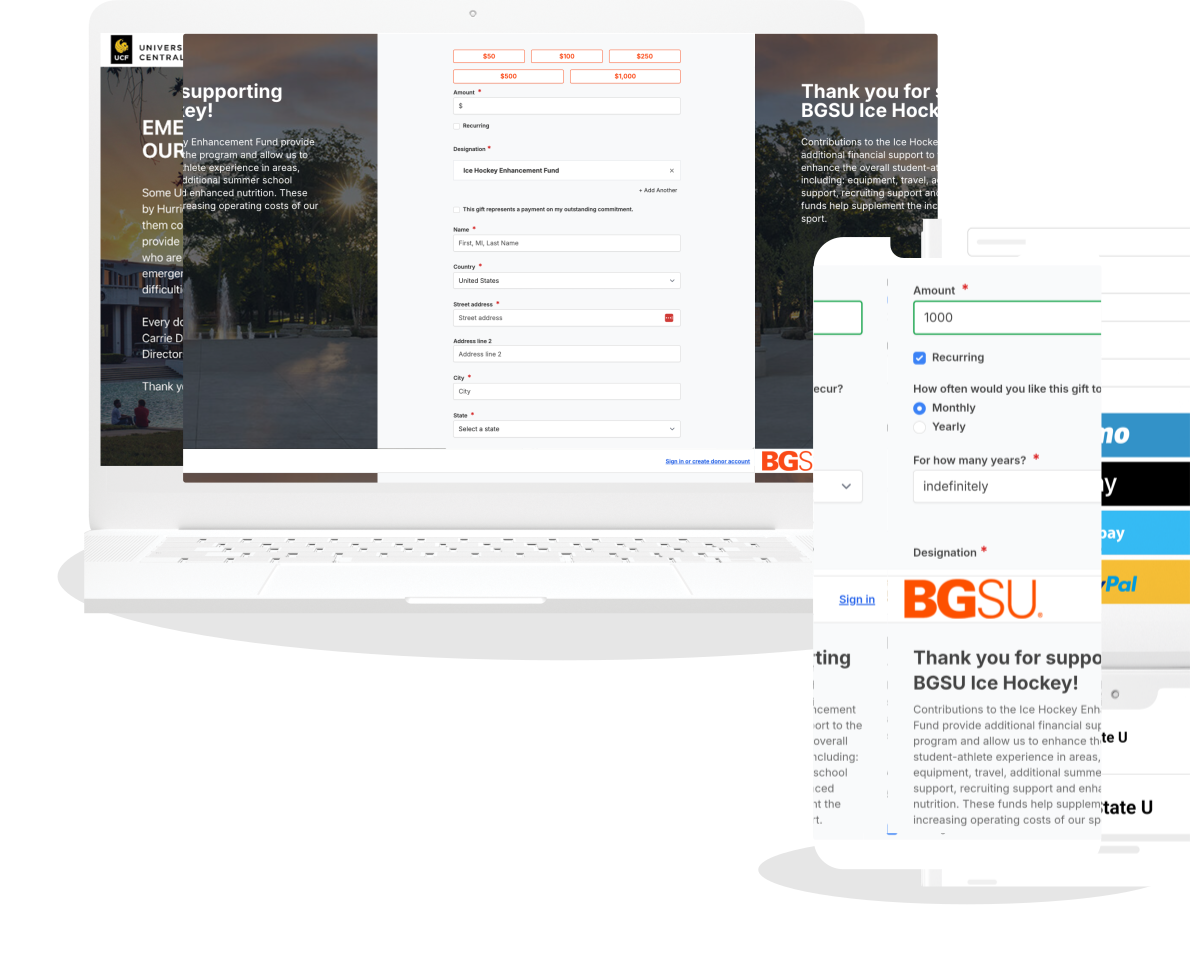
Bowling Green State University (BGSU) shows what this looks like in practice. Its athletics giving page brings together 19 giving forms: one for nearly every varsity sport, plus the Falcon Club Scholarship and Success Fund and a mentorship program for student-athletes. Each sport gets its own card and photo, so a volleyball parent, an ice hockey alum, and a cross country booster each land on a form built for their team.
3. Lean into the competitive spirit
The same competitive instinct that fills the stands can fill a leaderboard. Rivalry challenges, live leaderboards, and peer-to-peer advocacy give coaches, student-athletes, and alumni a reason to rally their networks. Tiered campaigns let every team compete on a level field, and matches from major donors add urgency.
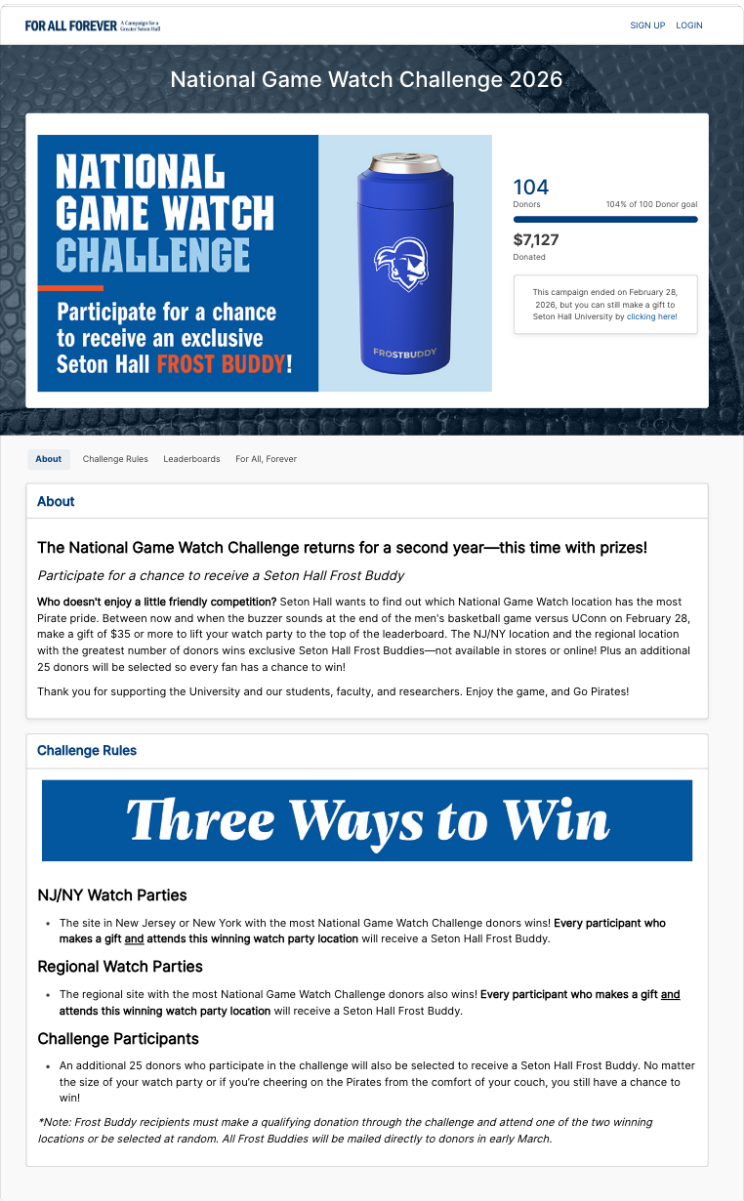
Seton Hall University put that spirit to work with its National Game Watch Challenge. Ahead of the men’s basketball game against UConn, watch party locations across the country competed to post the most donors. Every donor at the winning New Jersey/New York site and the winning regional site earned an exclusive Seton Hall Frost Buddy, and 25 more donors were chosen at random. A gift of $35 or more qualified, so fans cheering from the couch could still join in.
4. Turn game days into donor pipelines
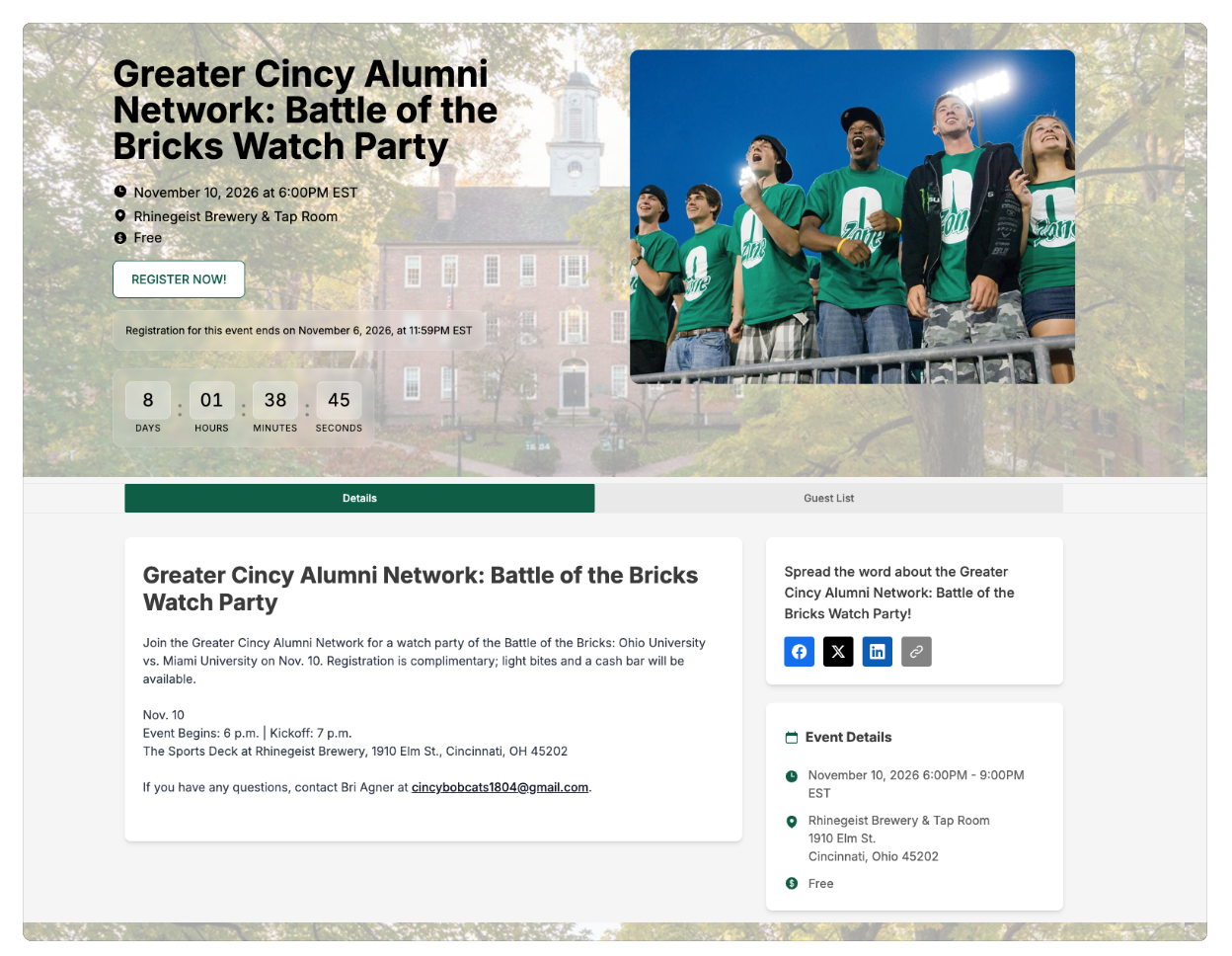
Tailgates, watch parties, and alumni gatherings draw your most passionate fans. Every registration shows you who came, which gives your team a list of engaged fans to thank, steward, and ask. When event registration includes built-in giving, each RSVP also becomes a chance to make a gift on the spot. Pair the event with a giving challenge like Seton Hall’s, and the party itself becomes a fundraiser.
Ohio University’s Greater Cincy Alumni Network, for example, invited alumni to a free watch party in Cincinnati for the Battle of the Bricks, Ohio’s rivalry game against Miami University. Fans register online, see who else is coming on the guest list, and share the event with friends in a click.
5. Build revenue you can count on
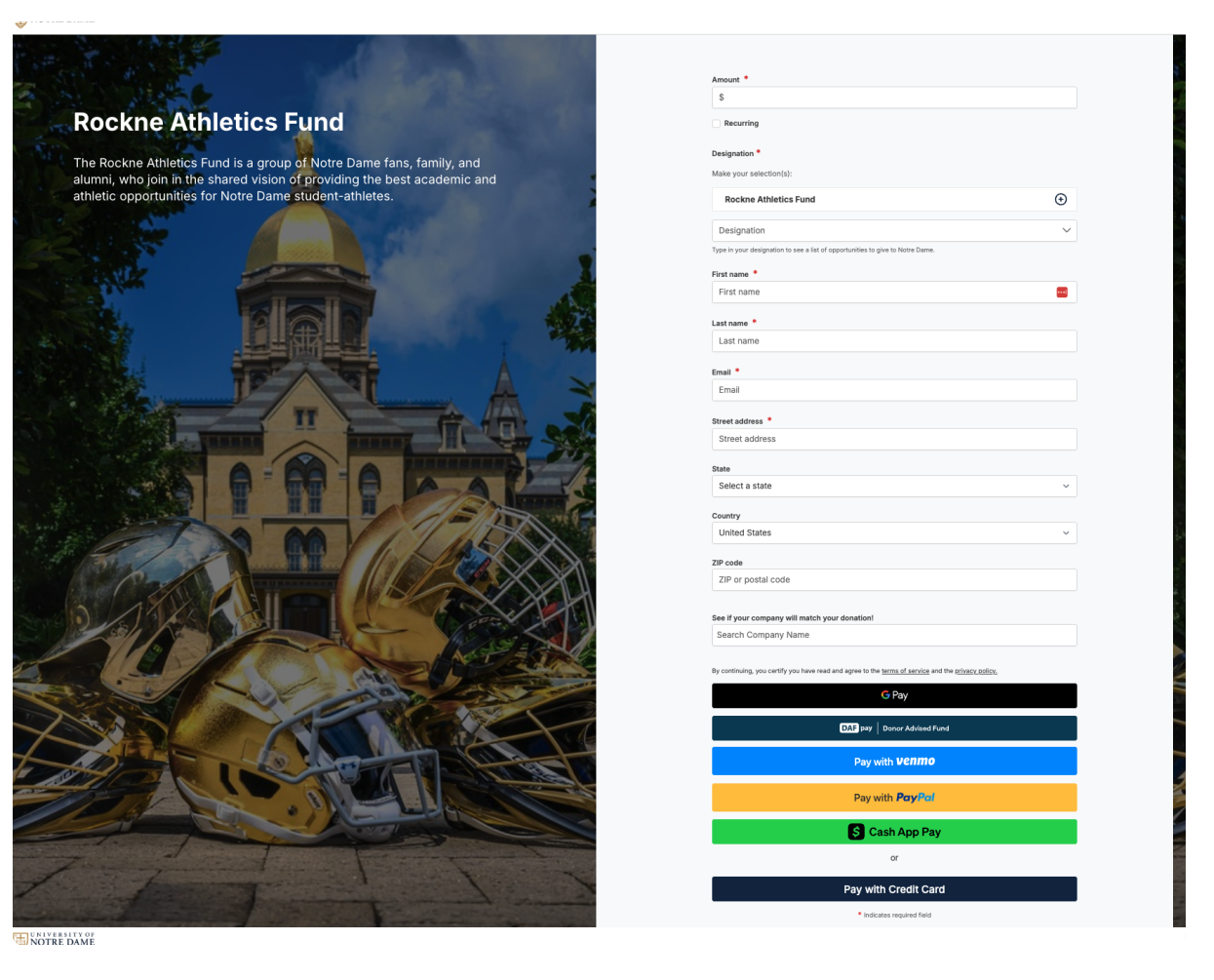
Revenue sharing comes due every year, so the most predictable way to fund it is revenue that renews every year: memberships and recurring gifts. Booster club memberships with clear tiers and visible benefits give donors a reason to commit year after year, and dues stay in sync with every other appeal. Recurring gift options make it easy for fans to keep showing up between seasons.
The University of Notre Dame’s Rockne Athletics Fund shows how far this model can go. Members give annually at levels from $1,500 to $50,000, with a monthly option at every level and young alumni levels starting at $100. Each tier adds benefits, from tailgate access to practice viewing and pregame field passes. In fiscal year 2025, Rockne members contributed more than $25.9 million to support Notre Dame’s more than 700 student-athletes.
The “NIL era” reaches every division
Settlement schools face the most urgent change, and the pressure extends to every division. Shrinking NCAA distributions, roster shifts, and sports cuts at schools such as Mississippi College and Cal Poly are reaching D2, D3, and NAIA programs. Some schools are making bigger moves: Saint Francis University is leaving Division I for Division III after athletics costs roughly tripled in a decade.
For programs at every level, the strongest response to that pressure is a broader, more engaged donor base, and the five plays above work at any scale. Bucknell, a Patriot League school with no revenue-generating sports, raised $2.27 million from 4,138 donors on its most recent athletics giving day. Student-athlete advocacy was one of several tactics behind that result. Once every athlete had a personal fundraising link in hand, advocacy-attributed gifts jumped 60 percent in a single year.
DePauw University, a Division III school, put a rivalry to work. In the middle of its OneTeamDePauw Giving Week, the football team beat Wabash College 33–30 in double overtime, and the advancement team used GiveCampus Updates to send game-day alerts to donors. “We saw giving to football explode after that,” said Randa Hammett, Senior Alumni Engagement Director. DePauw finished at 228 percent of its donor goal, with millennial and Gen Z donors leading the way.
The rules will keep changing, but the fundamentals hold
The courts, conferences, and NCAA will keep rewriting the rules. Through every change, college athletics will run on the alumni, fans, families, and communities who show up for their teams.
The programs that thrive in this new era will make it easy for those people to give, at every level and at every moment.
See how we help athletics programs raise more.
Frequently asked questions
What is the House v. NCAA settlement?
The House v. NCAA settlement resolved a set of antitrust lawsuits against the NCAA and its major conferences. It took effect on July 1, 2025, and allows Division I schools that opt in to pay athletes directly through revenue sharing for the first time.
How much can schools share with athletes under the settlement?
Schools that opted in could share up to $20.5 million with athletes in 2025–26, the first year of the settlement. The cap rises each year and reaches about $21.3 million in 2026–27.
What’s the difference between NIL and revenue sharing?
NIL (name, image, and likeness) payments come from third parties, such as brands, local businesses, or NIL collectives, that pay athletes to use their name or image. Revenue sharing is money a school pays its athletes directly under the House settlement, up to the annual cap.
The two now run side by side. The boosters who support NIL collectives are often the same people being asked to give to the athletics department directly, which raises the risk of donor fatigue for programs that rely on a small group of givers. A broader donor base helps spread the load.
What is the Protect College Sports Act?
The Protect College Sports Act is a federal bill that passed the U.S. Senate 77–22 on September 28, 2026. It would cap total athlete pay, limit athletes to one transfer without sitting out, require minimum rosters in women’s and Olympic sports, and give college sports leaders an antitrust exemption. It still has to pass the House.
How can athletics departments raise more money to cover revenue sharing?
Programs that raise at scale work the whole donor pyramid: they focus gift officers on major gift prospects, make giving easy for every fan, use rivalries and competition to drive participation, turn game-day events into donor pipelines, and build predictable revenue through memberships and recurring gifts.
About the data: GiveCampus figures reflect online gifts to higher ed athletics designations and campaigns on the GiveCampus platform, by fiscal year (July 1–June 30). Offline and administrator-entered gifts are excluded.